By Admin
2025: A Year of Transformation at ECN
Dec 10, 2025
2025: A Year of Transformation at ECN
2025: A Year of Transformation at ECN
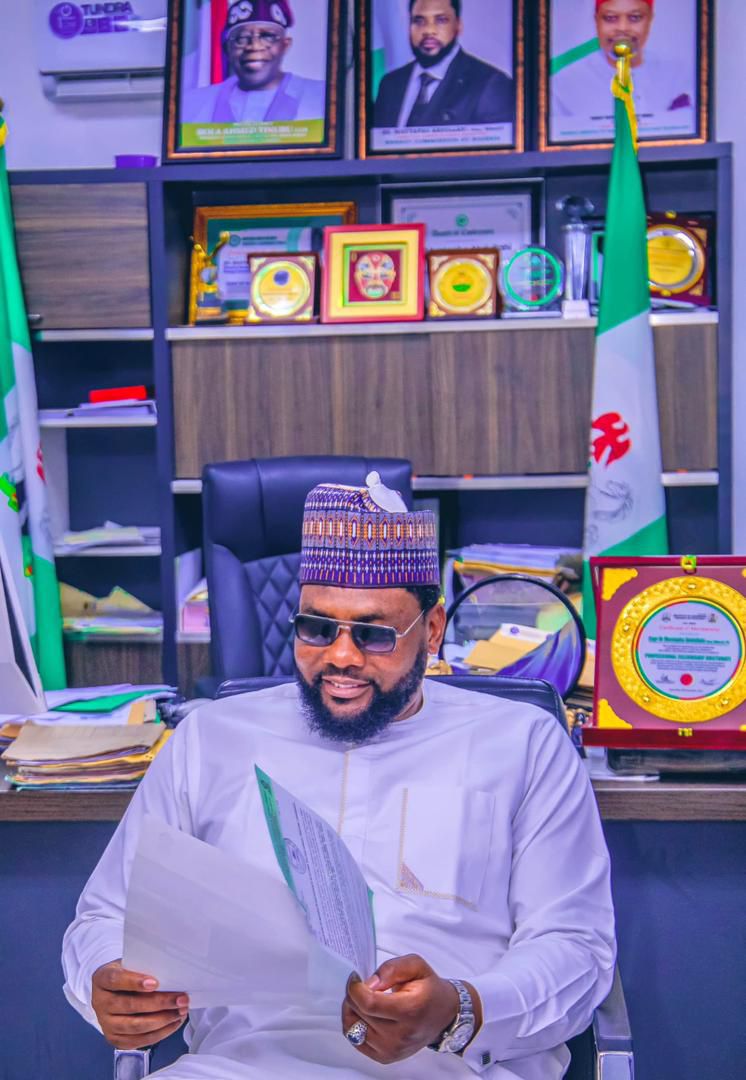
I have been following the trajectory of the Energy Commission of Nigeria (ECN) as it concludes 2025 with a remarkable record of strategic achievements, international partnerships, infrastructure delivery, workforce development, and community-focused programmes under the leadership of its Director-General and Chief Executive Officer, Dr Mustapha Abdullahi, CEng, MIMechE.
The year 2025 has been defined by measurable progress across policy, investment mobilisation, technical partnerships, infrastructure deployment, corporate social responsibility, and institutional capacity-building. All of which have directly contributed to Nigeria’s energy security and economic growth. These gains have firmly positioned ECN as a central driver of Nigeria’s energy transition and a key implementation agency of the Federal Government’s Renewed Hope Agenda.
From the beginning of the year, Dr Abdullahi prioritised strengthening ECN’s institutional capacity. Internal reforms, streamlined processes, and enhanced inter-agency coordination improved national energy planning, long-term modelling, and the deployment of renewable energy solutions. Evidence-based decision-making, national energy security, energy efficiency, and decentralised energy systems remained central pillars of the Commission’s strategy.
A significant milestone in workforce development was the executive and staff training retreats in Abuja, Nigeria, and Kigali, Rwanda. These retreats delivered immersive, hands-on capacity-building programmes focused on leadership development, technical skill enhancement, strategic planning, and knowledge exchange. They strengthened teamwork, improved operational efficiency, and ensured ECN’s leadership and workforce were well equipped to implement national energy policies and execute complex renewable energy projects nationwide.
On the global stage, ECN achieved heightened visibility and secured several transformative partnerships. A flagship accomplishment was the signing of a €100 million investment Memorandum of Understanding (MoU) in London, United Kingdom, formalised at the House of Lords in October 2025. This landmark agreement is structured to unlock large-scale renewable energy investments, mobilise concessional and private finance, facilitate technology transfer, and strengthen institutional capacity for clean energy deployment. In practical terms, it is expected to accelerate solar and renewable energy installations across multiple states, improve electricity access for underserved communities, and catalyse further private-sector participation in Nigeria’s energy sector.
Further expanding ECN’s global footprint, Nigeria signed a landmark MoU with China Energy in 2025 to support renewable energy development and power sector reform. This strategic partnership focuses on grid modernisation, renewable energy integration, energy infrastructure development, and technical cooperation, reinforcing Nigeria’s long-term electricity reform agenda and diversifying international energy partnerships.
Dr Abdullahi also represented Nigeria at high-level climate and energy forums in Bonn, Germany, where he presented Nigeria’s clean energy transition pathways, integrated energy planning frameworks, and financing requirements. In Paris, France, ECN engaged in technical discussions on sustainable cooling and refrigeration technologies, advancing the adoption of Minimum Energy Performance Standards (MEPS) to reduce electricity demand and carbon emissions. The Commission also delivered presentations during UNGA 80 in New York, USA, and at COP30 in Belém, Brazil, while in Brasília, ECN deepened South–South cooperation through knowledge exchange on integrated energy planning and renewable energy project development.
Additionally, a US$10 million investment agreement secured in Dubai, during the Middle East engagement widely referred to as the “Dubai Investors’ Delight”, further reflects growing international investor confidence in Nigeria’s energy transition and ECN’s technical leadership.
At the national level, ECN achieved several landmark outcomes that translated policy into tangible impact. One such achievement was the commencement of a 7MW Solar Power Project at Aminu Kano Teaching Hospital, a critical infrastructure intervention designed to deliver reliable, clean, and uninterrupted electricity to one of northern Nigeria’s largest tertiary healthcare facilities. The project will significantly reduce dependence on diesel generators, lower operating costs, cut carbon emissions, and improve healthcare service delivery.
To advance industrial development and local capacity building, ECN entered into a strategic partnership with LONGi, a global leader in solar manufacturing. This collaboration aims to boost local solar panel manufacturing in Nigeria, support technology transfer, strengthen domestic value chains, create jobs, and drive sustainable growth in the renewable energy sector while reducing reliance on imports.
The Commission also inaugurated the National Technical Committees for Renewable Energy and Energy Efficiency, which now coordinate policy implementation, technical standards, research collaboration, and partnerships with state governments and private-sector stakeholders. MEPS implementation progressed substantially within the cooling and refrigeration sub-sector, translating regulatory frameworks into measurable energy savings, reduced electricity costs, and environmental benefits nationwide.
The Barefoot Renewable Energy College in Kogi State, located at the Confluence University of Science and Technology (CUSTECH), Osara, moved decisively from concept to reality in 2025, with construction nearing completion by year-end. This flagship initiative will train Nigerians in solar installation, system maintenance, and clean energy technologies, creating skilled employment opportunities, empowering rural communities, and promoting grassroots energy self-reliance.
ECN also commissioned Nigeria’s first Electric Vehicle (EV) charging station at its Abuja headquarters, serving as a practical demonstration of commitment to clean mobility, innovation, and sustainable energy adoption, while providing a model for integrating renewable energy with electric transportation nationwide.
Corporate social responsibility remained central to Dr Abdullahi’s leadership philosophy. ECN sustained community engagement, youth empowerment, and social inclusion initiatives throughout the year. A major highlight is the upcoming National Basketball Tournament, scheduled for late December 2025, which is designed to promote healthy living, youth engagement, social cohesion, and national unity through sports.
Public engagement and transparency were equally prioritised. Dr Abdullahi led consistent policy dialogues, technical workshops, media engagements, and digital briefings, ensuring that stakeholders, investors, and the wider public remained informed about ECN’s programmes, reforms, and achievements.
In summary, 2025 stands out as a truly transformational year for the Energy Commission of Nigeria. Institutional reforms strengthened internal operations; executive and staff training in Abuja and Kigali enhanced workforce capacity; international engagements across Bonn, Paris, London, New York, Brasília, Belém, and Dubai elevated Nigeria’s global energy profile; strategic MoUs with China Energy and private investors unlocked new investment pathways; partnerships with LONGi advanced local manufacturing; national committees and MEPS implementation delivered measurable efficiency gains; the 7MW solar project at Aminu Kano Teaching Hospital demonstrated impact-driven infrastructure delivery; and initiatives such as the Barefoot Renewable Energy College, EV charging station, and youth-focused CSR programmes affirms ECN’s commitment to sustainable development.
A man clearly on a journey of purposeful leadership, Dr Mustapha Abdullahi has translated ambition into tangible outcomes, strengthened Nigeria’s energy infrastructure, expanded global partnerships, enhanced institutional capacity, and laid a durable foundation for sustainable energy, economic growth, and community empowerment well beyond 2025.
Hon. Victor Okebunmi
Senior Special Assistant (Publicity)
Renewed Hope Global